Out-of-school learning access depends on more than family funding. This article examines the provider infrastructure, trusted partnerships, and shared visibility that help community-based learning opportunities remain dependable, accessible, and responsive to young people and families.
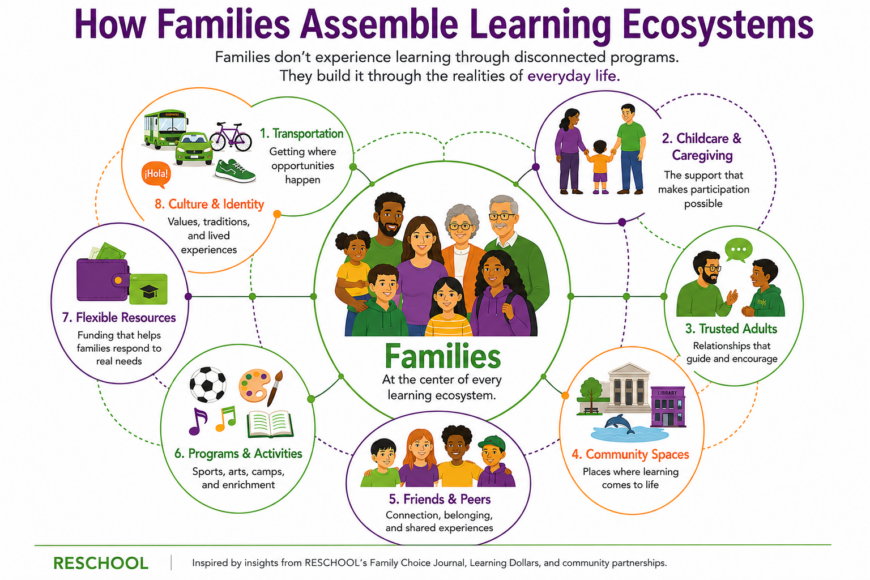
Young people should be able to access meaningful learning wherever it happens. Years of working alongside families, community organizations, and out-of-school learning providers across Colorado have shown that flexible resources, trusted guidance, strong partnerships, and responsive programs must work together to make those opportunities possible.
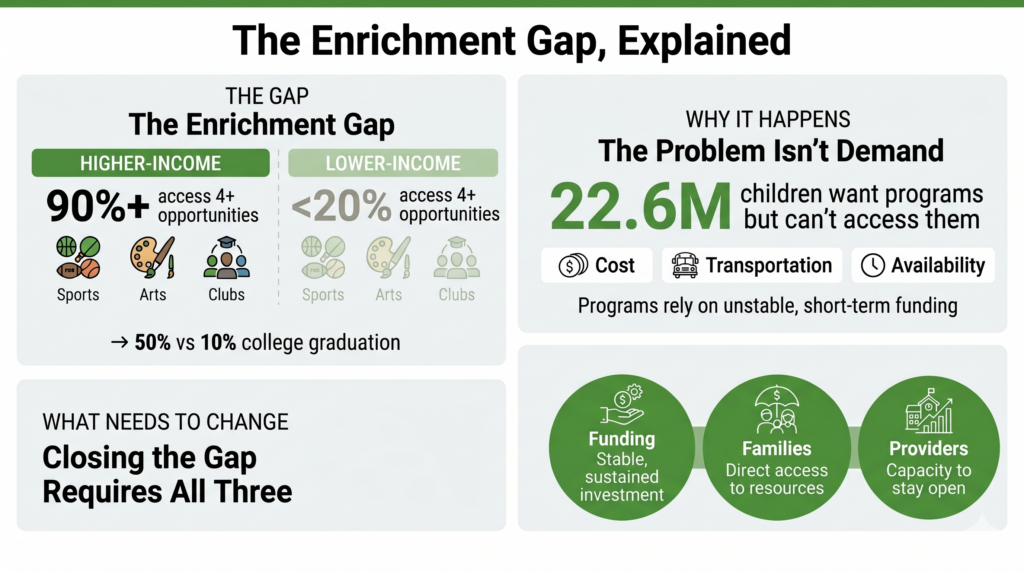
That work has also reinforced an important lesson: access depends not only on whether families can afford and navigate an opportunity, but on whether providers have the people, space, resources, relationships, and systems needed to offer it consistently. As communities work to expand learning beyond the classroom, the infrastructure behind those opportunities deserves greater attention.
Family-Directed Resources and Provider Capacity Work Together
Family-directed funding is an important part of a more equitable learning landscape. It can make a camp, class, tutoring program, arts experience, or membership financially possible. It expands agency by giving families greater ability to choose opportunities that fit their children.
Resources directed to providers create complementary conditions that help those choices work as intended. Strong organizations need people, space, materials, coordination, and stable systems to create and sustain the opportunities families seek. Access depends both on families’ ability to participate and on providers’ ability to deliver.
Denver’s My Spark Scholarship, inspired by RESCHOOL’s Learning Dollar Funds, offers one example of how these pieces can work together. Originally launched by the City and County of Denver, Mile High United Way, and Gary Community Ventures and now led by Denver Public Schools Foundation, My Spark provides eligible middle school families with up to $1,000 to choose from more than 200 local enrichment providers. The model directs resources to families while also connecting them to a network of community-based opportunities, helping generate enrollment and revenue for participating providers.
This is not an either/or choice. Durable access requires family-directed resources, navigation, provider capacity, and ecosystem coordination working together. The question for funders and policymakers is how to strengthen the full set of relationships and conditions that connect young people to opportunities.
Quality Access Has Real Operating Requirements
High-quality out-of-school learning does not happen by accident. It relies on the practical operating conditions that let providers build relationships, create safe and welcoming environments, deliver programming consistently, and improve over time.
Providence, Rhode Island offers one example of what this infrastructure can look like at the ecosystem level. As a recent Getting Smart profile of the city’s approach describes, the Providence After School Alliance (PASA) has worked across schools, city agencies, and community organizations to make out-of-school learning more coordinated and accessible. Its model has included neighborhood-based learning hubs, shared enrollment and scheduling, transportation support, professional development for youth-serving professionals, and common standards for program quality.
The lesson is not that every community should replicate Providence’s model. It is that expanding access requires attention to the systems around individual programs. Transportation, workforce development, coordination, quality standards, trusted partnerships, and sustainable infrastructure all influence whether learning opportunities can reliably reach young people.
National research offers context on why sustained attention to those conditions matters. The Power of Us workforce survey found that 69% of youth-field workers identified better pay and/or benefits as a needed job improvement. An Afterschool Alliance provider survey found that 81% reported concerns about finding staff, retaining staff, or both. These are national findings, not measurements of Colorado’s provider workforce, but they underscore the importance of investments that help youth-serving organizations remain strong and dependable.
The infrastructure behind access is not abstract. It is the instructor who can be compensated and trained. It is the coordinator who can organize families, schedules, and logistics. It is dependable space, materials, insurance, and administrative capacity. Together, these conditions allow community organizations to respond to young people’s interests and deliver programs with consistency and care.
What Provider Infrastructure Looks Like in Practice: Globeville, Elyria, and Swansea Provider Dollars
RESCHOOL’s 2025 Globeville, Elyria, and Swansea (GES) Provider Dollars program offers a practical illustration of what flexible resources directed to providers can support. Families helped identify the types of opportunities they wanted in the Globeville, Elyria, and Swansea communities. Cultivando served as a bridge between families and providers, engaging residents and working with providers to develop programs shaped by neighborhood priorities and relationships.
Through this partnership, RESCHOOL supported two neighborhood-based enrichment programs for young people: a six-week strength, conditioning, and mindfulness program and a ten-week music and literacy program. The spending distribution tells an important story. Forty-four percent supported instructor and mentor compensation and training. Another 18.5% supported program supplies and musical equipment, 18% supported program coordination, and 11% supported space rental and insurance. The remaining funds covered administrative fees and snacks and hydration.
These were not peripheral costs. They were the components that enabled six- and ten-week programs to operate for young people ages 5 to 15. The example is not a claim that every Colorado provider has the same budget or needs. It shows how flexible provider resources, grounded in community partnership, can help make promising opportunities dependable.
Visibility Is Infrastructure Too: The Denver Learning Ecosystem
Provider infrastructure is not only about what happens inside an individual program. It is also about whether a community can see its learning landscape clearly enough to connect, collaborate, and ask better questions together.
The Denver Learning Ecosystem, created by RESCHOOL, Moonshot, and Embark Education, makes that landscape more visible. The live site includes more than 400 organizations and allows users to explore the ecosystem through plot, map, and table views.
A directory cannot measure current enrollment capacity, open seats, financial stability, staffing needs, program quality, transportation access, or schedules. It is not a provider-capacity assessment. Instead, it creates a shared visibility and coordination layer that can surface organizations and patterns for further inquiry.
That visibility can help funders, policymakers, providers, and community partners consider where partnerships could strengthen what already exists, where deeper listening or data may be needed, and how investments can support community-based opportunities. A map is not a substitute for operating support, but it can make collaboration and more informed investment easier.
Strengthen the Ecosystem Around Young People and Families
The goal is not simply to expand funding. It is to ensure that funding, relationships, and shared information strengthen the conditions that allow learning opportunities to exist, respond to local priorities, and endure.
For funders and policymakers, that means considering the whole access equation. Family-directed resources can reduce cost and expand choice. Navigation can help families find opportunities with confidence. Investments in provider capacity can help organizations build the workforce, operations, and quality needed to deliver. Shared visibility can support more informed coordination and collaboration.
These components reinforce one another. When providers have flexible resources and strong partnerships, they can deepen relationships and improve programming. When families can find, afford, and navigate dependable opportunities, they have greater ability to participate in learning beyond the school day. And when communities can see more of the ecosystem, they can identify questions and possibilities worth pursuing together.
RESCHOOL’s role is to cultivate those connections: bringing together families, providers, funders, system leaders, and community organizations to make learning opportunities more accessible, visible, and responsive to community needs.
If we want more young people to have meaningful options beyond the school day, we must invest in the conditions that allow those options to exist and endure. Explore the Denver Learning Ecosystem to see Denver’s out-of-school learning landscape, discover organizations, and consider where collaboration or investment may be needed.