Taber’s path to assistant coaching shows what happens between a young person’s interest and meaningful participation. RESCHOOL explores the supports, relationships, and reflection that turn real-world learning opportunities into pathways young people can enter, learn from, and carry forward.
Taber had recently graduated from high school and was beginning to think seriously about what could come next. An athlete himself, he was interested in becoming a coach and working with younger people in the sports he knew and enjoyed.
Turning that interest into something he could actually pursue required more than identifying a goal. Over the summer, Taber used Learning Dollars to receive one-on-one support while completing self-paced coaching requirements, including CPR certification and other requirements needed to work in a public school setting.
His story is part of the current phase of Mapping Real World Learning, RESCHOOL’s ongoing effort to understand what young people learn through experiences beyond the classroom, what helps them access those experiences, and how that learning connects to what comes next. By following young people’s pathways over time, the project looks beyond the experience itself to the relationships, supports, barriers, and decisions that shape whether meaningful participation is possible.
Taber’s pathway makes those often-invisible steps easier to see. His interest in coaching was the starting point. But moving from interest to participation required translating requirements into concrete next steps, providing support to complete them, and connecting that preparation to a real opportunity.
His story raises a larger question: What does it take to turn a young person’s interest into a pathway they can actually enter and use?
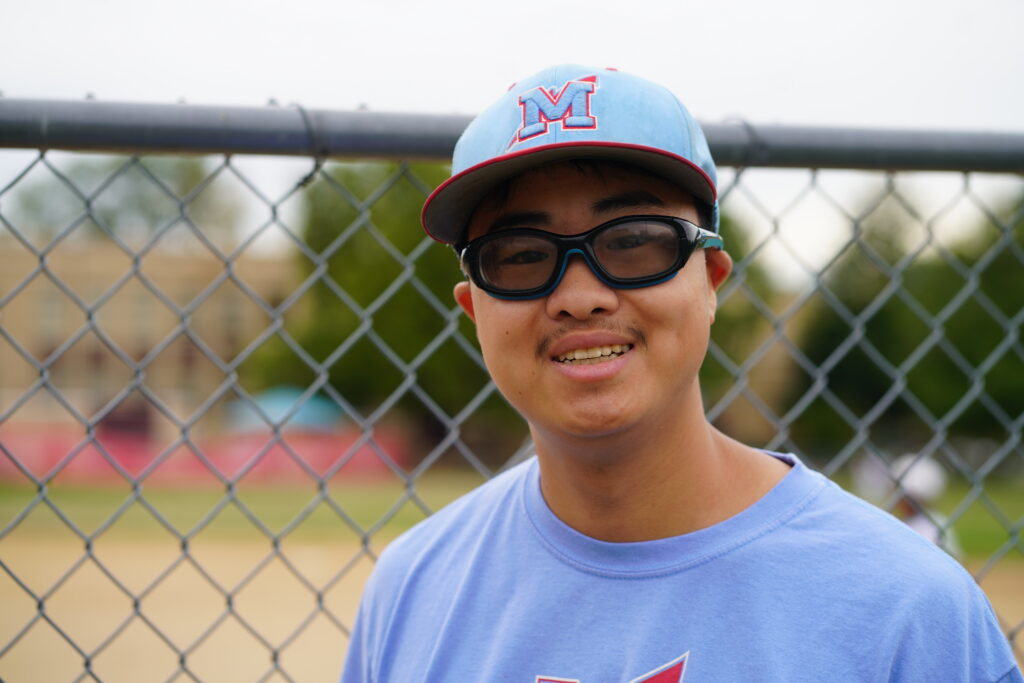
Taber at the baseball field, where an interest in coaching has become an assistant coaching opportunity.
The Missing Middle: Building the Bridge to Participation
That question points to what we might think of as the missing middle of real-world learning: the connective work between identifying an interest and meaningfully participating in an opportunity.
Depending on the learner and the experience, that may mean understanding unfamiliar requirements, completing an application or course, communicating with new adults, navigating logistics, finding the right support, or troubleshooting barriers along the way. None of this diminishes learner agency. It makes agency actionable.
Through Mapping Real World Learning, RESCHOOL is also examining the role that Learner Advocates can play in helping young people move from interest to participation. Learner Advocacy is not new to RESCHOOL. For years, Learner Advocates have helped young people and families navigate opportunities, connect with resources and trusted adults, work through barriers, and make choices based on their individual goals and circumstances.
What Mapping Real World Learning adds is an opportunity to look more closely at how that kind of relational support functions within real-world learning pathways. In Taber’s case, the connective work included helping translate an interest into concrete next steps, supporting completion of requirements, and helping link that preparation to an actual opportunity. The broader question is how these kinds of supports can help make real-world learning more accessible, coherent, and connected to what comes next.
June, Taber’s mom, describes that connective work plainly: “When I thought about Taber actually becoming a coach, I had no idea what it would take. It made a world of difference to have somebody helping Taber to go through the steps to reach that goal.”
Taber echoes that experience from his perspective: “It really helped to have help and support to reach my goal.” Now that he is assistant coaching, he says, “The coaching experience has been really great. I love being an assistant coach.”
From Visibility to Pathway: Making Learning Visible, Usable, and Transferable
This current phase builds on what RESCHOOL learned during the first phase of Mapping Real World Learning. That earlier qualitative work, involving 16 participants across two partner schools, highlighted the importance of agency, trusted relationships, and access to adult networks, while also surfacing questions about readiness and how learning beyond the classroom is documented and recognized.
Phase 2 moves the inquiry forward by following learner-driven pathways over a longer period of time. Through interviews, reflection, checkpoints, and artifacts, RESCHOOL is examining what happens before, during, and after real-world learning experiences and how young people make sense of what they are gaining.
That matters because meaningful learning does not automatically become visible or useful in the next setting. Young people may build skills, confidence, relationships, and direction through real-world experiences, but those forms of growth can be difficult to communicate through traditional markers alone.
The question is evolving from where learning happens and how we see it, to what helps that learning become part of a meaningful pathway. Can young people recognize what they have gained and carry that learning into whatever comes next?
What If Readiness Has to Move in Both Directions?
Participation in a real environment can create meaningful learning, but experience alone does not guarantee that learning will transfer into the next setting.
A 2026 realist review in Frontiers in Public Health examined 56 studies of employment pathways for youth ages 15–25 with disabilities. It found that successful transitions involved not only skills development, but also social support, communication and collaboration between schools and workplaces, and coordination across the systems surrounding young people. The review also found examples of skills learned in programs failing to translate into real-world settings when those connections and supports were missing, reinforcing the importance of looking beyond individual preparation alone.
Colorado’s current work-based learning guidance reflects a similar understanding of what makes an experience meaningful. The state’s framework calls for educators and employers to clarify what participants should learn, assess progress throughout the experience, provide structured opportunities for reflection, and help learners produce evidence of the skills they developed. That approach aligns closely with questions at the center of Mapping Real World Learning: not simply whether an experience happened, but what made participation possible, what a young person learned from it, and how that learning can become visible afterward.
Together, these perspectives raise a practical question: alongside preparing a young person for an opportunity, what conditions must the receiving environment create for that young person to participate, learn, and grow?
NACE’s 2026 Job Outlook research offers another piece of that picture. In its survey of employers hiring new college graduates, NACE found that internships and other experiential opportunities can help students develop workplace skills, but also emphasized that young people need support articulating and demonstrating those skills through concrete examples. NACE also points to a role for employers themselves: building skill development intentionally into internships and communicating expectations clearly. While the research focuses on college graduates rather than all young people, it reinforces an important principle for real-world learning: learners and receiving organizations both have a role in making an experience developmental and understandable
This is where the idea of mutual preparation becomes useful. Readiness does not have to mean lowering expectations or shifting responsibility away from the learner. It can mean considering the fit between a learner and a real environment, and recognizing that clear expectations, relationships, reflection, and support can shape what a young person is able to gain from the experience.
Making Learning Visible and Transferable
For learning to transfer into real-world settings, it has to be visible in forms that others can understand. Reflection, work samples, mentor observations, portfolio artifacts, and credentials can help a young person describe what they learned. But documentation is a bridge, not a guarantee of recognition.
The Federation of American Scientists’ August 2026 Colorado Skills Map proposal identifies a related systems challenge: learning acquired through credentials, college credits, work-based learning, and readiness programs can be difficult to interpret across institutions without shared skills language. The proposal is not an implemented Colorado system. It does, however, name the portability question.
Taken together, this work points to five conditions worth considering when we think about what makes an opportunity more accessible:
– Start with the learner’s interests, goals, and agency.
– Make requirements and next steps understandable, and connect learners and families to trusted people who can help navigate them.
– Coordinate relationships and practical support across the people and settings shaping participation.
– Consider both learner preparation and receiving-environment conditions.
– Capture learning in ways that make reflection and future recognition more possible.
– These are not a formal model or a single prescription. They are a lens for recognizing the connective work that can otherwise remain invisible.
A Learning Agenda, Not a Finished Answer
Mapping Real World Learning is still investigating how real-world learning is experienced, documented, and carried forward. That includes learning alongside young people and families about which supports feel useful, how relationships shape access, and what evidence of growth matters in different settings.
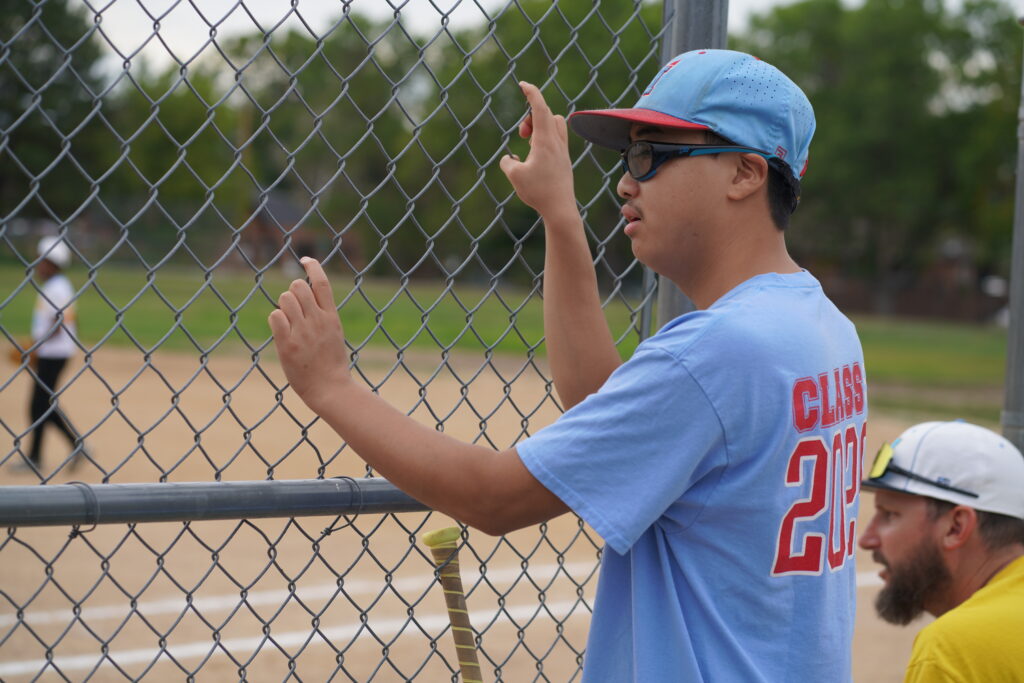
Taber at the baseball field, where his interest in coaching has become an assistant coaching opportunity.
Taber and June’s experience adds invaluable perspectives to this work. For Taber, the pathway that began with an interest in coaching has now become something he is actively experiencing. “Assistant coaching is going great. It is the best part of my day,” he says. “It feels like I reached my goal.”
June’s perspective also captures the balance between support and growing independence: “As a mom, I have to work on not trying to do everything for him, but letting him take more responsibility for his future.”
What their story helps make visible is that meaningful real-world learning depends on more than the existence of an opportunity. It depends on the connections, relationships, preparation, and support that help a young person move from interest to participation and from participation to whatever comes next.
As RESCHOOL continues Mapping Real World Learning, the goal is not simply to identify more opportunities. It is to better understand how we build pathways that young people can access, learn from, and carry forward.