Tag

learner advocacy

September 29, 2026

From Interest to Opportunity: What It Takes to Build an Accessible Real-World Learning Pathway

Taber’s path to assistant coaching shows what happens between a young person’s interest and meaningful participation. RESCHOOL explores the supports, relationships, and reflection that turn real-world learning opportunities into pathways young people can enter, learn from, and carry forward.

Taber’s path to assistant coaching shows what happens between a young person’s interest and meaningful participation. RESCHOOL explores the supports, relationships, and reflection that turn real-world learning opportunities into pathways young people can enter, learn from, and carry forward.

Taber had recently graduated from high school and was beginning to think seriously about what could come next. An athlete himself, he was interested in becoming a coach and working with younger people in the sports he knew and enjoyed.

Turning that interest into something he could actually pursue required more than identifying a goal. Over the summer, Taber used Learning Dollars to receive one-on-one support while completing self-paced coaching requirements, including CPR certification and other requirements needed to work in a public school setting.

His story is part of the current phase of Mapping Real World Learning, RESCHOOL’s ongoing effort to understand what young people learn through experiences beyond the classroom, what helps them access those experiences, and how that learning connects to what comes next. By following young people’s pathways over time, the project looks beyond the experience itself to the relationships, supports, barriers, and decisions that shape whether meaningful participation is possible.

Taber’s pathway makes those often-invisible steps easier to see. His interest in coaching was the starting point. But moving from interest to participation required translating requirements into concrete next steps, providing support to complete them, and connecting that preparation to a real opportunity.

His story raises a larger question: What does it take to turn a young person’s interest into a pathway they can actually enter and use?
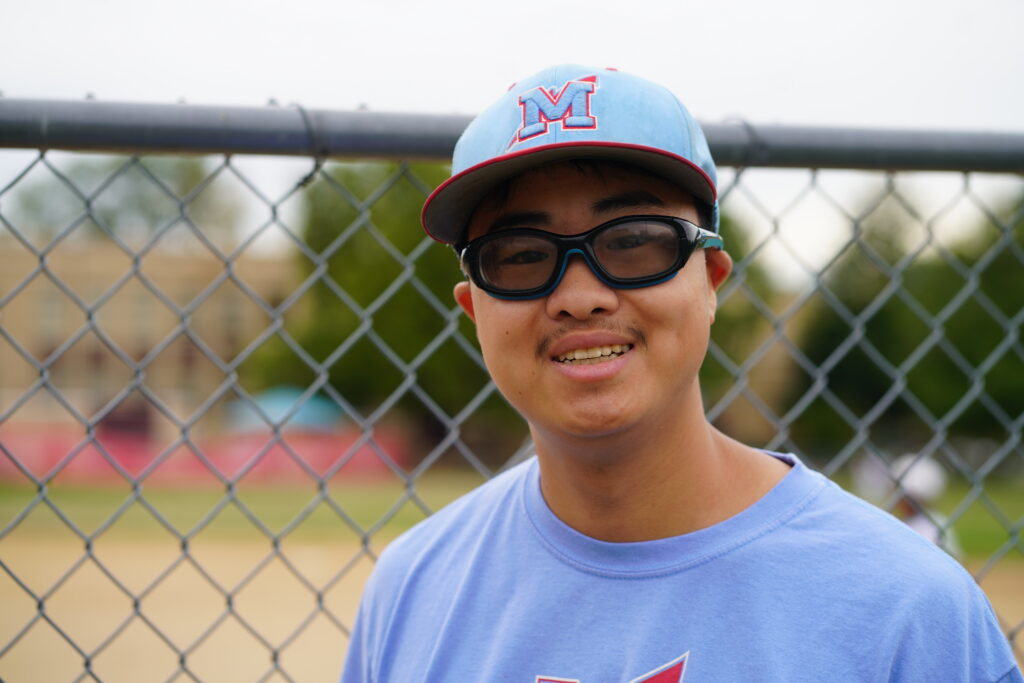
Taber at the baseball field, where an interest in coaching has become an assistant coaching opportunity.

Taber at the baseball field, where an interest in coaching has become an assistant coaching opportunity.

The Missing Middle: Building the Bridge to Participation

That question points to what we might think of as the missing middle of real-world learning: the connective work between identifying an interest and meaningfully participating in an opportunity.

Depending on the learner and the experience, that may mean understanding unfamiliar requirements, completing an application or course, communicating with new adults, navigating logistics, finding the right support, or troubleshooting barriers along the way. None of this diminishes learner agency. It makes agency actionable.

Through Mapping Real World Learning, RESCHOOL is also examining the role that Learner Advocates can play in helping young people move from interest to participation. Learner Advocacy is not new to RESCHOOL. For years, Learner Advocates have helped young people and families navigate opportunities, connect with resources and trusted adults, work through barriers, and make choices based on their individual goals and circumstances.

What Mapping Real World Learning adds is an opportunity to look more closely at how that kind of relational support functions within real-world learning pathways. In Taber’s case, the connective work included helping translate an interest into concrete next steps, supporting completion of requirements, and helping link that preparation to an actual opportunity. The broader question is how these kinds of supports can help make real-world learning more accessible, coherent, and connected to what comes next.

June, Taber’s mom, describes that connective work plainly: “When I thought about Taber actually becoming a coach, I had no idea what it would take. It made a world of difference to have somebody helping Taber to go through the steps to reach that goal.”

Taber echoes that experience from his perspective: “It really helped to have help and support to reach my goal.” Now that he is assistant coaching, he says, “The coaching experience has been really great. I love being an assistant coach.”

From Visibility to Pathway: Making Learning Visible, Usable, and Transferable

This current phase builds on what RESCHOOL learned during the first phase of Mapping Real World Learning. That earlier qualitative work, involving 16 participants across two partner schools, highlighted the importance of agency, trusted relationships, and access to adult networks, while also surfacing questions about readiness and how learning beyond the classroom is documented and recognized.

Phase 2 moves the inquiry forward by following learner-driven pathways over a longer period of time. Through interviews, reflection, checkpoints, and artifacts, RESCHOOL is examining what happens before, during, and after real-world learning experiences and how young people make sense of what they are gaining.

That matters because meaningful learning does not automatically become visible or useful in the next setting. Young people may build skills, confidence, relationships, and direction through real-world experiences, but those forms of growth can be difficult to communicate through traditional markers alone.

The question is evolving from where learning happens and how we see it, to what helps that learning become part of a meaningful pathway. Can young people recognize what they have gained and carry that learning into whatever comes next?

What If Readiness Has to Move in Both Directions?

Participation in a real environment can create meaningful learning, but experience alone does not guarantee that learning will transfer into the next setting. 

A 2026 realist review in Frontiers in Public Health examined 56 studies of employment pathways for youth ages 15–25 with disabilities. It found that successful transitions involved not only skills development, but also social support, communication and collaboration between schools and workplaces, and coordination across the systems surrounding young people. The review also found examples of skills learned in programs failing to translate into real-world settings when those connections and supports were missing, reinforcing the importance of looking beyond individual preparation alone.

Colorado’s current work-based learning guidance reflects a similar understanding of what makes an experience meaningful. The state’s framework calls for educators and employers to clarify what participants should learn, assess progress throughout the experience, provide structured opportunities for reflection, and help learners produce evidence of the skills they developed. That approach aligns closely with questions at the center of Mapping Real World Learning: not simply whether an experience happened, but what made participation possible, what a young person learned from it, and how that learning can become visible afterward.

Together, these perspectives raise a practical question: alongside preparing a young person for an opportunity, what conditions must the receiving environment create for that young person to participate, learn, and grow?

NACE’s 2026 Job Outlook research offers another piece of that picture. In its survey of employers hiring new college graduates, NACE found that internships and other experiential opportunities can help students develop workplace skills, but also emphasized that young people need support articulating and demonstrating those skills through concrete examples. NACE also points to a role for employers themselves: building skill development intentionally into internships and communicating expectations clearly. While the research focuses on college graduates rather than all young people, it reinforces an important principle for real-world learning: learners and receiving organizations both have a role in making an experience developmental and understandable

This is where the idea of mutual preparation becomes useful. Readiness does not have to mean lowering expectations or shifting responsibility away from the learner. It can mean considering the fit between a learner and a real environment, and recognizing that clear expectations, relationships, reflection, and support can shape what a young person is able to gain from the experience.

Making Learning Visible and Transferable

For learning to transfer into real-world settings, it has to be visible in forms that others can understand. Reflection, work samples, mentor observations, portfolio artifacts, and credentials can help a young person describe what they learned. But documentation is a bridge, not a guarantee of recognition.

The Federation of American Scientists’ August 2026 Colorado Skills Map proposal identifies a related systems challenge: learning acquired through credentials, college credits, work-based learning, and readiness programs can be difficult to interpret across institutions without shared skills language. The proposal is not an implemented Colorado system. It does, however, name the portability question.

Taken together, this work points to five conditions worth considering when we think about what makes an opportunity more accessible:

– Start with the learner’s interests, goals, and agency.
– Make requirements and next steps understandable, and connect learners and families to trusted people who can help navigate them.
– Coordinate relationships and practical support across the people and settings shaping participation.
– Consider both learner preparation and receiving-environment conditions.
– Capture learning in ways that make reflection and future recognition more possible.
– These are not a formal model or a single prescription. They are a lens for recognizing the connective work that can otherwise remain invisible.

A Learning Agenda, Not a Finished Answer

Mapping Real World Learning is still investigating how real-world learning is experienced, documented, and carried forward. That includes learning alongside young people and families about which supports feel useful, how relationships shape access, and what evidence of growth matters in different settings.
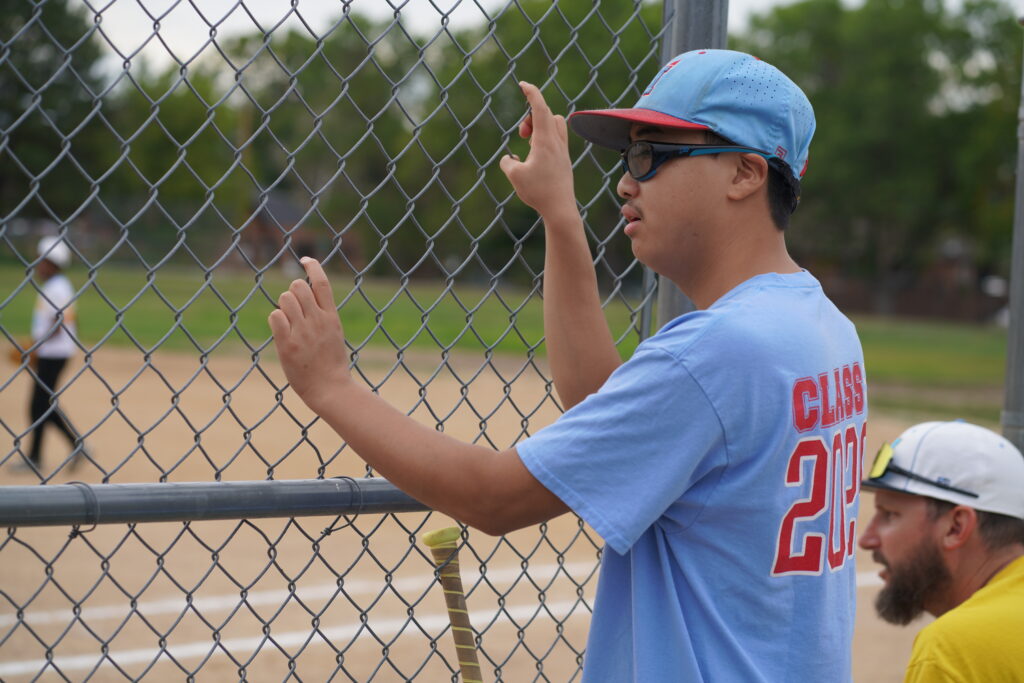
Taber at the baseball field, where his interest in coaching has become an assistant coaching opportunity.

Taber at the baseball field, where his interest in coaching has become an assistant coaching opportunity.

Taber and June’s experience adds invaluable perspectives to this work. For Taber, the pathway that began with an interest in coaching has now become something he is actively experiencing. “Assistant coaching is going great. It is the best part of my day,” he says. “It feels like I reached my goal.”

June’s perspective also captures the balance between support and growing independence: “As a mom, I have to work on not trying to do everything for him, but letting him take more responsibility for his future.”

What their story helps make visible is that meaningful real-world learning depends on more than the existence of an opportunity. It depends on the connections, relationships, preparation, and support that help a young person move from interest to participation and from participation to whatever comes next.

As RESCHOOL continues Mapping Real World Learning, the goal is not simply to identify more opportunities. It is to better understand how we build pathways that young people can access, learn from, and carry forward.

April 9, 2026

Real-World Learning Beyond the Classroom: Why Education Systems Must Adapt

RESCHOOL Colorado shares what Phase 1 of Mapping Real World Learning revealed: the experiences that most shape young people’s identity, confidence, and future pathways often happen beyond the classroom, yet education systems still struggle to recognize and support them.

RESCHOOL Colorado shares what Phase 1 of Mapping Real World Learning revealed: the experiences that most shape young people’s identity, confidence, and future pathways often happen beyond the classroom, yet education systems still struggle to recognize and support them.

Mapping Real World Learning is a new RESCHOOL initiative grounded in a simple but often overlooked question: how do young people actually experience learning across their lives, and what does that mean for how we define readiness?

Most education systems measure the learning that happens inside the four walls of a classroom. But young people spend the majority of their time outside of them, developing skills, relationships, and a sense of direction through experiences that are rarely captured or valued in formal systems. Mapping Real World Learning aims to better understand this broader landscape of learning, document its impact, and explore how it might be more consistently recognized in the systems that shape opportunity, from education to workforce pathways.

In Phase 1, we partnered with two schools that intentionally integrate real-world learning into their models: Odyssey School of Denver and La Luz. Through interviews with students, families, and educators, we explored how young people are engaging in learning beyond the classroom and how they describe the impact of those experiences on their identity, confidence, and future pathways. What we heard was both consistent and revealing.

When asked where they learn something that matters to them, the answer is rarely “in math class.”

That is not an argument against schools. Schools are essential. But in conversations with young people, a clear pattern emerged: the experiences they describe as most formative, the ones that shape the sense of who they are and what they might become, are the ones happening beyond the classroom. Experiences when they’re engaged in real work with real people, and not just exercises in academics. After all, students are human beings, and like all of us, are motivated by the instinct to learn and to use what they learn to make a place for themselves in the world. Students described these experiences as transformative in building confidence, independence, and a stronger sense of identity. These experiences allow students to “try on” new roles such as leader, advocate, or collaborator, sparking deeper curiosity and giving them the confidence to pursue it independently. In after-school programs. On job sites. In community spaces and at home. With mentors, coaches, peers, and trusted adults who are not their teachers.

As one young person put it, “I’ve definitely developed the skill to advocate for myself… and if you advocate for yourself, you can get things done.”

What we heard points to a deeper issue: the experiences that most shape young people’s identity, confidence, and future pathways are still largely invisible to the systems designed to prepare them for life after school.

This is not news to anyone who works closely with young people. But it matters enormously for how we design learning systems, fund education, and think about who is responsible for supporting youth.

Phase 1: What We Heard

In Phase 1, we conducted in-depth interviews with students and families participating in school models that integrate real-world learning into the school day. Four findings emerged consistently across these conversations.

1. Out-of-school experiences are identity-shaping, not supplemental.

Young people describe out-of-school experiences as places where they build confidence, develop a stronger sense of self, and begin to understand what they are capable of. These environments place them in real situations with real expectations, real audiences, and real outcomes, where they can take meaningful risks while being supported by trusted adults and peers.

Through these experiences, young people begin to see themselves differently. They practice advocating for themselves, trying new roles, and navigating unfamiliar situations, often in ways that extend beyond what traditional classroom settings alone can offer.

These experiences are not peripheral. 

Over time, this repeated exposure builds durable confidence and a greater willingness to take risks. As one student shared, “I am usually always anxious at the start and scared… but I just end up loving it… so what I’ve learned is just do it, even if you’re terrified.”

This reveals a fundamental misalignment: our systems tend to treat these experiences as enrichment, while young people experience them as core to who they are becoming.

2. Trusted relationships enable risk-taking and make learning meaningful.

When young people talked about the experiences that mattered most, they consistently pointed to a specific person, such as a teacher, mentor, or peer who helped them make sense of what they were doing and learning. Not a website. Not a brochure. A relationship.

In Phase 1, these relationships were most often with teachers who had built enough trust for students to take on the uncertainty and challenge these experiences required. That trust made risk-taking possible.

Parents observed this shift as well. One parent shared: “He’s himself now. He’s not scared to be himself… he is not afraid to make eye contact and share his voice with people.”

These relationships also help students build social capital, not just by expanding their networks, but by developing the skills to navigate them on their own.

This has direct implications for learner navigation. It is not just about access to options, but about sustained relationships that support risk-taking and sense-making over time.

3. No single adult or institution holds the full picture.

Schools see the school day. Program providers see program hours. Families see home. But no one sees it all.

Young people themselves are the only ones carrying the whole story of their learning lives—and they frequently lack the language, the tools, and the institutional support to make that story legible to others or even to themselves.

This reality reflects a broader structural mismatch: young people spend the majority of their waking hours outside of school, yet most systems remain anchored to what happens inside it.

This is not just a coordination challenge. It is a structural limitation. Our education systems were built around a single institution as the center of learning. They are not designed to recognize learning as distributed across people, places, and time.

4. “Readiness” and risk shape how families make decisions about learning

“Readiness” emerged as a consistent tension across interviews, particularly for families. While students demonstrated growth in confidence, independence, and problem-solving, many families continued to define readiness through traditional academic structures and benchmarks. This created an ongoing tradeoff in decision-making, where developmental gains were weighed against concerns about academic rigor and future preparedness.

At the same time, participation in real-world learning is shaped by risk tolerance and access to resources. Families with greater financial, social, or educational support were more likely to engage in nontraditional learning environments or extend these experiences beyond school. For others, perceived risks such as falling behind academically, financial cost, or uncertainty about outcomes limited participation.

Together, these dynamics highlight that real-world learning is not only a question of impact, but of access and belief. Expanding participation will require both stronger ways of demonstrating readiness and additional support for families navigating these decisions.

The Missing Piece: Access and Recognition

There is another reality embedded in these findings: access to these experiences is not evenly distributed.

Research shows that for every child in an afterschool program, several more are waiting to get in, with cost and availability acting as major barriers. At the same time, many forms of real-world learning—working in a family business, caring for siblings, contributing to community life—are happening every day but remain unrecognized and unsupported.

This creates a double inequity. Some young people lack access to high-quality opportunities. Others are already developing valuable skills through lived experience, but those skills are never named, documented, or valued in formal systems.

If we continue to treat real-world learning as optional or invisible, we risk reinforcing the very inequities we are trying to solve.

Why This Matters Right Now

The findings from the Mapping Real World Learning project arrive at an inflection point for American education.

Across the country, policy-driven mechanisms like Education Savings Accounts and the recently enacted federal Education Freedom Tax Credit, alongside shifts within public education such as career-connected learning, competency-based models, and microschools operating in both public and private contexts, are giving students more options than ever before. At the same time, the landscape is fragmenting. Young people are now more likely to be learning across a wider range of settings like public and private schools, afterschool programs, online platforms, community organizations, and workplaces, with less coordination across them than ever before.

The paradox of this moment is that as choice expands, the need for coherence grows. Families are being handed more options and less support for making sense of them. Young people, already navigating these experiences largely on their own, are being asked to do even more without an adult or system holding the full picture of their learning.

What Navigation Looks Like in Practice

This is exactly why RESCHOOL’s work on learner navigation and advocacy has never felt more urgent.

What we are learning from the Mapping Real World Learning project reinforces what we have seen in our direct work with families across Denver: that what young people need is not just access to more options, but someone who can help them connect those options into something coherent.

A learner advocate who helps a family “braid” the school day with afterschool, summer, and community learning. A navigator who understands that a young person’s internship experience and her history class are part of the same story.

This is not a small lift. It requires trust, time, and a relationship that is accountable to the learner, not to a school, not to a program, and not to a funder, but to the young person and family at the center.

What Comes Next

Phase 2 of the Mapping Real World Learning project is focused on a critical next step: making real-world learning more visible, measurable, and usable in ways that systems can actually recognize.

This includes:

  • Developing clearer ways to articulate what young people gain from these experiences, not just in terms of “confidence,” but in pathways, networks, and readiness for what comes next
  • Exploring how learning can be captured and tracked over time through more comprehensive student records, rather than one-time snapshots
  • Connecting these experiences to existing broader skill and readiness frameworks, or building new ones grounded in how young people actually learn
  • Helping young people and families translate these experiences into language that “counts” in applications, resumes, and future opportunities

This is about more than documentation. It is about building the connective tissue between lived experience and the systems that shape opportunity.

A System That Can See the Whole Learner

If we take young people seriously, we have to take their learning seriously, even when it happens outside the structures we are most comfortable measuring.

The question is no longer whether learning happens beyond school. We know that it does. The question is whether our systems are ready to recognize it, support it, and ensure that every young person has access to it.

These experiences are central to how young people build identity, develop agency, and navigate the world. Yet without systems to capture and recognize their impact, they will continue to be treated as enrichment rather than core to a young person’s development.

Because until we can see the full picture of how young people learn, we will continue to design systems that only support part of who they are, and only part of what they need to thrive.

You can follow our latest blogs and updates on our website and sign up for RESCHOOL’s newsletter to receive future pieces like this in your inbox: [Subscribe to RESCHOOL’s newsletter]

March 16, 2026

Who Helps Families Navigate Learning When Choices Expand?

As education choices expand, families need more than options, they need guidance. RESCHOOL Colorado explores why navigation and learner advocacy matter, and how trusted adults can help families connect school, out-of-school learning, and real-world opportunities into a more coherent path.

As education choices expand, families need more than options, they need guidance. RESCHOOL Colorado explores why navigation and learner advocacy matter, and how trusted adults can help families connect school, out-of-school learning, and real-world opportunities into a more coherent path.

Across the country, families are hearing a familiar message: more education choices are coming.

Education savings accounts, tax credits, scholarships, work-based learning, early college, and expanded out-of-school programs. On paper, it looks like a wider set of opportunities for young people. In practice, it often looks like a more fragmented system that asks families to do even more work to find, evaluate, and piece together options.

That is the paradox at the heart of today’s education landscape. Choice is expanding, while the structure and accountability that families can rely on are thinning out. Many families now have more responsibility for navigating learning, but fewer supports to do it.

RESCHOOL sees this shift very clearly in Colorado. For more than a decade, we have worked alongside families, community organizations, and systems leaders to understand how young people actually experience learning across their days, years, and communities. What we hear again and again is simple:

Families do not just need more options. They need someone in their corner to help make sense of those options.

This is where navigation and learner advocacy come in.

From More Options To More Complexity

Two big shifts are happening at the same time.

First, learning is decentralizing. Young people spend roughly 80 percent of their waking hours outside of school. Those hours are filled, in very uneven ways, with sports, jobs, caregiving, community programs, cultural activities, and online experiences. New public and private funding tools are starting to acknowledge that learning happens across this wider ecosystem, not only inside school buildings.

Second, accountability is changing. Traditional systems often relied on a fairly rigid structure: one primary school, one set of tests, one district that holds most of the formal responsibility. In some new choice and tax credit programs, that structure is loosening or disappearing without something else in its place. Families are asked to make complex decisions, track learning, and coordinate schedules across multiple settings, often with little support.

Parents tell us they are excited about new possibilities, but they are also overwhelmed. They want to know:

  • Which options are a good fit for my child, not just in theory but in real life with our schedule, transportation, and responsibilities?
  • Who will help us connect school, out-of-school programs, and work-based learning so it adds up to something coherent?
  • If something goes wrong, who is responsible for fixing it?

These questions are not technical details; they are the daily reality for families trying to help their children thrive in a landscape that is changing faster than the support and governance structures around it.

What We Mean By “Learner Advocacy”

In this context, RESCHOOL has been exploring what it would look like to create a learner advocate network that can serve as a steady anchor for young people and their families.

A learner advocate is a trusted adult or team whose primary responsibility is to the learner, not to a single program or institution. That person or team:

  • Helps connect what happens in school, out-of-school time, and real-world experiences so it counts and builds toward something larger
  • Helps families understand the full range of learning options available to them
  • Supports them in making choices that reflect their values, goals, and constraints
  • Stays with the learner over time, checking in as needs and circumstances change.

This is not about replacing schools, counselors, or community organizations. It is about stitching together the work that many people are already doing and creating a clear point of accountability for the learner’s overall experience.

In a more dispersed system, where funding and learning are intertwined across multiple settings, someone needs to hold the full picture with the learner at the center. That is the role we see for learner advocates.

What Navigation Looks Like On The Ground

Navigation is easiest to understand in practice. In our work, learner advocacy has included things like:

  • Sitting with families as they use tools such as the Family Choice Journal to identify what matters most to them, including safety, culture, logistics, interests, and relationships
  • Walking them through application and scholarship processes for out-of-school programs, sports, tutoring, and cultural experiences
  • Helping them stack different opportunities so transportation and schedule work across school, after-school, and weekends
  • Connecting families to new programs that match their priorities, not just the most visible or best-funded options
  • Staying in touch over time, especially when a family’s work schedule changes, a young person’s interests shift, or a program closes

Families consistently describe how different it feels to have someone actively help them navigate, rather than simply sending a list of links or brochures.

For young people, navigation and advocacy can also show up as:

  • A trusted adult who asks about their interests and future plans, and then points them to programs, jobs, or courses that align with those interests
  • Someone who helps connect a job or internship to graduation requirements, industry credentials, or college credit
  • An advocate who notices when a student is overextended or under-supported, and helps adjust their mix of commitments
  • A guide who helps families and youth navigate system barriers such as language access, technology literacy, transportation, and access to supplies or equipment needed to fully participate

In short, navigation is not a static directory. It is a relationship-centered practice that helps families and youth move through a complex system without having to hold every detail on their own.

Why Navigation Matters Now

The need for navigation and learner advocacy is not new. Families have always relied on informal networks, individual teachers, and community leaders to help them find and access opportunities. What is new is the speed and scale of policy change.

With the federal Education Freedom Tax Credit moving toward implementation, and states like Colorado planning to participate, the number of possible programs, providers, and funding streams will likely grow. If that growth is not paired with navigation and learner advocacy, the benefits will tilt toward families who already have time, information, and connections.

In that scenario:

  • Families with flexible jobs and social networks will be more likely to hear about options, understand eligibility, and successfully apply
  • Families who speak languages other than English, work multiple jobs, or are less connected to formal systems will face higher barriers to participation
  • Out-of-school providers that already have development staff and administrative capacity will be better positioned to tap into new funding streams, while smaller community organizations struggle to keep up

Navigation and learner advocacy do not fix these inequities on their own. They do, however, make it more likely that new dollars reach the families and providers who have historically been left out, rather than simply layering more complexity on top of existing gaps.

How This Connects To Reschool’s Work In Colorado

RESCHOOL’s navigation and learner advocacy work is rooted in Colorado communities. Over the past decade, we have:

  • Supported funds that direct resources to families and providers for out-of-school learning
  • Invested in tools like the Denver Learning Ecosystem website to make opportunities more visible
  • Provided direct learner advocate support to working parents as an employee benefit
  • Worked alongside community partners who act as trusted navigators for families in their neighborhoods
  • Developed and tested resources such as the Family Choice Journal that help families reflect on their priorities and choices

Across these efforts, the throughline is clear. When families have both resources and navigation support, they can access experiences that match their children’s interests and needs. When out-of-school providers have stable, predictable funding and are included in program design, they can expand and sustain offerings that communities rely on. When someone is paying attention to how all of the pieces fit together for the learner, the system feels less like a maze and more like a network of possibilities. And when students can articulate what they have learned and how they have grown across these experiences, it can open doors to future opportunities in school, work, and beyond.

As new public funding tools come online, RESCHOOL will continue to share what we are learning with partners in Colorado and beyond. We see navigation and learner advocacy as essential parts of any serious effort to build and fund equitable learning ecosystems, not as optional extras.

Looking Ahead

Education systems are changing. The question is whether those changes will deepen or narrow access to meaningful learning for young people.

If we want more than a patchwork of programs, if we want ecosystems where all youth can discover their interests, build skills, and feel a sense of belonging, then navigation and learner advocacy have to be part of the design. Families should not be asked to carry the full weight of a more complex system on their own.

In the months ahead, RESCHOOL will be:

  • Continuing to resource navigation and advocacy models with community partners
  • Highlighting tools that support families as they make choices, including the Family Choice Journal
  • Sharing lessons from Colorado with policymakers, funders, and practitioners who are shaping new programs

If you are a funder, policymaker, provider, or intermediary working on out-of-school learning, we invite you to stay connected and to be part of this conversation.

You can follow our latest blogs and updates on our website and sign up for RESCHOOL’s newsletter to receive future pieces like this in your inbox: [Subscribe to RESCHOOL’s newsletter]